Capy Castaway Exploration Tips for Castaway Island
Slow feet, sharp beak, open heart.
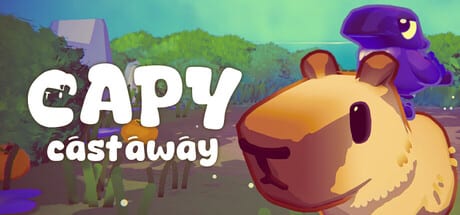
Exploration is the tutorial, the side content, and much of the joy in Capy Castaway. Kitten Cup Studio built a cozy adventure where sniffing mud, fetching from rooftops, and wearing ridiculous hats are core verbs—not optional minigames. These tips compress habits that prevent backtracking pain and missed collectibles while keeping the wholesome tone intact.
Whether you are sampling the Steam demo or planning an August 6, 2026 launch session with friends, the same routines apply. Castaway Island rewards curiosity at walking speed.
The five-minute zone routine
Before chasing the main prompt in any new area, run this short loop:
- Walk the perimeter as Capy—muddy paths often hide interactables along edges.
- Sniff obvious dirt patches and any ground disturbance near fences or docks.
- Launch Corvi along high edges, rooflines, and tree lines visible from your position.
- Talk to every NPC once, even if dialogue seems trivial.
- Interact with three “useless” objects on purpose—barrels, signs, machines, flower beds.
- Leave a mental pin for anything gated by a missing tool or unfinished quest.
- Only then follow the story arrow or your own priority quest.
This routine takes five minutes in compact spaces like Swallow Town and scales to larger biomes after launch.
Verticality checklist
Capy Castaway’s duo design means most zones have a ground layer and an aerial layer. At each overlook, ask:
- Can Corvi fetch something Capy cannot reach?
- Can Capy dig below while Corvi holds position above?
- Can a carry combo skip a fence or short gap (Duo Combos)?
- Is there water access Capy can swim to while Corvi scouts inland?
Skipping the vertical pass is the number-one reason players declare a zone “empty” when hats and Trinkets remain hidden.
Note-taking without spoiling yourself
Write landmark nicknames, not guide spoilers: “crooked fence,” “blue stall,” “mud spiral near geese.” Transfer confirmed collectibles into the Collectibles Checklist after each session.
If you are playing co-op, agree on a shared naming scheme early. “Left dock” beats ten minutes of “the place with the bird.”
When to revisit
Revisit logic matters in cozy adventures with story gates:
- After major story beats that mention weather, floods, or community events.
- After finishing optional arcs like the Soup Competition or bouquet care for the Bells.
- After demo patches—Kitten Cup Studio has shipped updated builds with expanded Swallow Town content.
- When hunting multiple endings (Multiple Endings).
If an NPC’s dialogue changes, assume the environment might have too.
Co-op search patterns
Local shared-screen co-op and Steam Remote Play Together both appear in the updated demo. Efficient duos:
- Split left and right lanes at zone entry, then converge at landmarks.
- Call shiny objects early so both players share the discovery moment.
- Avoid covering the same dig twice unless comedy demands it.
- Assign roles: one “interactor,” one “scout”—swap when boredom hits.
Setup details live in Co-op & Remote Play and the Co-op Setup Checklist.
Anti-frustration tools
If stuck for fifteen minutes on a single puzzle:
- Switch to a help quest (Help Castaways) and return with fresh eyes.
- Reread Puzzle Basics for verb reminders.
- Calibrate controls (Controls Hub)—sometimes the issue is input, not design.
- Take a photo break; Toronto-inspired vistas are part of the reward.
Cozy games punish pride more than timers. There is no leaderboard for sniff speed.
Demo-specific exploration
The demo highlights Swallow Town with English, Japanese, and Brazilian Portuguese interface support. Use it to practice routines before spending launch money (~$17.99 USD at announced pricing). Demo spaces teach interaction literacy described in How to Play without exposing every launch-day region.
Region primers
Start with Castaway Island for tone and flood context, then Swallow Town for hands-on practice. Quest guides under Guides Hub add step-by-step depth when you want structure instead of wandering.
Sound and pacing
Mark Sparling’s announced soundtrack supports slow exploration. Lower movement speed in new biomes, listen for ambient shifts near interactables, and let Corvi scout edges before you commit to a path. Many secrets sit beside audio cues rather than glowing markers.
Launch-week exploration goals
When the full game unlocks August 6, 2026, resist speedrunning Castaway Island on night one. Pick one hub, run the five-minute routine, log finds in the Collectibles Checklist, and save branching choices in the Endings Tracker. Short loops keep co-op groups aligned and cheerful.
Exploration tips are permission slips: you are allowed to poke the world until it giggles back.
Frequently Asked Questions
Quick answers to the most common questions.
Should I follow a perfect path?
No—use routines like the five-minute zone loop, not rigid routes. Pre-launch areas are still expanding, and launch day will add regions beyond the demo slice.
Do I need an external map app?
Start with in-game landmarks and the [Collectibles Checklist](/tools/collectibles-checklist/). External maps may help post-launch once the community maps the full island.
Is exploration kid-friendly?
Yes—short routines with hat goals work great for family sessions. Pair with [Co-op & Remote Play](/guides/co-op-remote-play/) if siblings want split roles.
Where do I learn puzzle verbs?
[Puzzle Basics](/guides/puzzle-basics/) covers sniff, dig, fetch, and carry combos. [Duo Combos](/characters/duo-combos/) adds advanced pair techniques.
Does the demo teach full-island exploration?
It teaches habits in Swallow Town, not every biome. Carry the same curiosity into the August 6, 2026 release.
Best page for location context?
[Castaway Island](/locations/castaway-island/) for overview, [Swallow Town](/locations/swallow-town/) for demo practice.